Uber, DoorDash, and Instacart all promise flexible money on your schedule. What they don’t promise — because they can’t — is a specific hourly wage. Actual gig pay depends on your market, your hours, your vehicle, and how strategically you work. Anyone quoting you one national number is selling something.
So here’s the honest version, built from the largest measured datasets available in 2026: Uber rideshare pays the most per hour (roughly $22–$24 gross), food delivery clusters around $11–$15, and grocery shopping sits near $12. But “gross” is doing a lot of work in that sentence — fuel, wear, and taxes take a real bite, and tips make up half of delivery pay.
This guide compares all three on pay models, measured earnings, requirements, costs, and the minimum-pay laws that change the math in some cities. Every figure is labeled by source type. No screenshots of someone’s best Saturday night.
How Each Platform’s Pay Actually Works
The three apps don’t pay you the same way, and the mechanics matter more than any single number.
Uber (rideshare): upfront algorithmic fares. Before you accept a trip, you see the estimated payout, distance, and destination. There’s no published rate card — each fare is set by algorithm from base rates, trip length, pickup distance, and real-time demand (surge). Pay per trip = fare + surge + promotions (Quests for completing a set of trips, Boost multipliers in busy zones) + 100% of tips + wait-time and cancellation fees. You log on whenever you want; declining trips is allowed, though acceptance rate feeds into Uber’s Pro rewards tiers.
DoorDash: two earning modes, both official and documented. In Earn by Offer mode, each delivery shows a guaranteed minimum before you accept, and pay = base pay ($2–$10+ per offer, based on time, distance, and desirability — DoorDash’s own help pages confirm base pay doesn’t change with the tip) + promotions (Peak Pay, Challenges, Delivery Streaks) + 100% of tips. In Earn by Time mode, you get a set hourly rate for active time only — waiting for an offer isn’t paid — plus 100% of tips. You can Dash Now when your zone has demand or schedule windows ahead. DoorDash’s own line, worth quoting: “Earnings vary, so there is no single number.”
Instacart: per-batch pay. Full-service shoppers are independent contractors paid per shopping batch, not per hour: batch payout = base pay + customer tips + promotions. Base reflects item count, distance, and estimated effort; unclaimed batches get boosted. In 2025, Instacart reportedly cut the minimum base from $7 to $4 for the smallest, quickest batches (shopper-reported via an email from the company; Instacart’s official page on current minimums couldn’t be verified, so treat the exact floor as unconfirmed). Typical batch pay runs $7–$12, and a batch takes roughly an hour. Note: Instacart also hires in-store shoppers as W-2 employees — fixed hourly pay around $13, no tips, scheduled shifts, no car needed. That’s a different job from full-service shopping.
What Drivers Actually Earn: Measured Medians
Here’s where we separate measured data from self-reported bragging.
The largest dataset is Gridwise’s 2026 Annual Gig Mobility Report, which analyzed roughly a billion gig jobs across 500,000+ drivers in 2025 (reported via Business Insider/ZeroHedge, March 2026). Its gross hourly medians:
| Platform | Measured median (gross/hr) | Source |
|---|---|---|
| Uber (rideshare) | ~$22–$24 | Gridwise 2026 |
| Uber Eats | ~$14–$15 | Gridwise 2026 |
| Instacart | ~$12 | Gridwise / tracked data |
| DoorDash | ~$11–$12 | Gridwise 2026 |
Independent tracker data from mid-2026 lands in the same neighborhood: Uber Eats ~$14.07/hr median (101,000+ drivers tracked), DoorDash ~$11.26/hr (115,000+ dashers), Instacart ~$12.21/hr trip pay.
Now the conflict you should know about: self-reported earnings run noticeably higher — secondary guides aggregate driver reports of $18–$28/hr across the apps. The methodologies explain the gap. Gridwise tracks actual app earnings across huge samples including slow hours; self-reports skew toward engaged drivers having good weeks and often exclude unpaid waiting time. Both are “real” — they just measure different things. When someone tells you they make $25/hr on DoorDash, ask whether that’s gross or net, and whether the waiting counts.
Two more Gridwise findings worth knowing: rider prices rose 9.6% from Dec 2024 to Dec 2025 while driver hourly earnings rose only 4.1% — the platforms are keeping more of the growth. And Uber has publicly disputed Gridwise-style figures before, saying drivers can make ~$32/hr during active time — which is precisely the “active time only” framing that excludes waiting.
Side-by-Side Comparison
| Uber (rideshare) | DoorDash | Instacart (full-service) | |
|---|---|---|---|
| What you do | Drive passengers | Deliver restaurant orders | Shop + deliver groceries |
| Pay model | Upfront algorithmic fare per trip | Per-offer base ($2–$10+) or active-time hourly | Per-batch base + tips |
| Measured median (gross/hr) | ~$22–$24 | ~$11–$12 | ~$12 |
| Tips share of pay | ~10% | ~49% | ~42–60% |
| Min age | 21 (25 for new CA signups) | 18 (19 in some states, 21 for new CA) | 18 (21+ for alcohol batches) |
| Vehicle | 4-door car, ≤15 yrs old, inspection | Any car; bike/scooter/foot in some markets | Reliable vehicle, no age requirement |
| Schedule | Log on anytime | Dash Now or scheduled windows | Accept batches from a list/map |
| Best for | Highest hourly ceiling, night/weekend availability | Most consistent order volume | Best per-mile pay, daytime/weekend hours |
A subtle but important row: per mile, Instacart leads at ~$2.84/mile median — fewer miles per dollar earned. Miles are the real cost in this business (see below), so per-mile efficiency matters as much as per-hour pay.
Requirements to Start
All three require a background check and a valid license. The differences:
- Age: DoorDash and Instacart start at 18 in most states (DoorDash requires 19 in a list of states including AZ, CO, FL, GA, TX, and 21 for new California applicants; Instacart requires 21+ for alcohol batches). Uber rideshare requires 21, and 25 for new signups in California.
- Vehicle: Uber is the strictest — 4-door car, 15 years old or newer, passing inspection. DoorDash officially has no make, model, or year requirement — any car works, and bike/scooter/foot delivery exists in select markets. Instacart requires a reliable vehicle with no stated age requirement.
- Insurance: Personal auto insurance in your name is required for motorized delivery/driving; a rideshare endorsement (roughly $15–$30/month) is recommended because personal policies often exclude commercial activity.
- Background check: All three run them (criminal + driving record, typically via a third-party provider).
The Costs Nobody Puts in the Ad
Gross hourly pay is not a wage. Here’s what comes out:
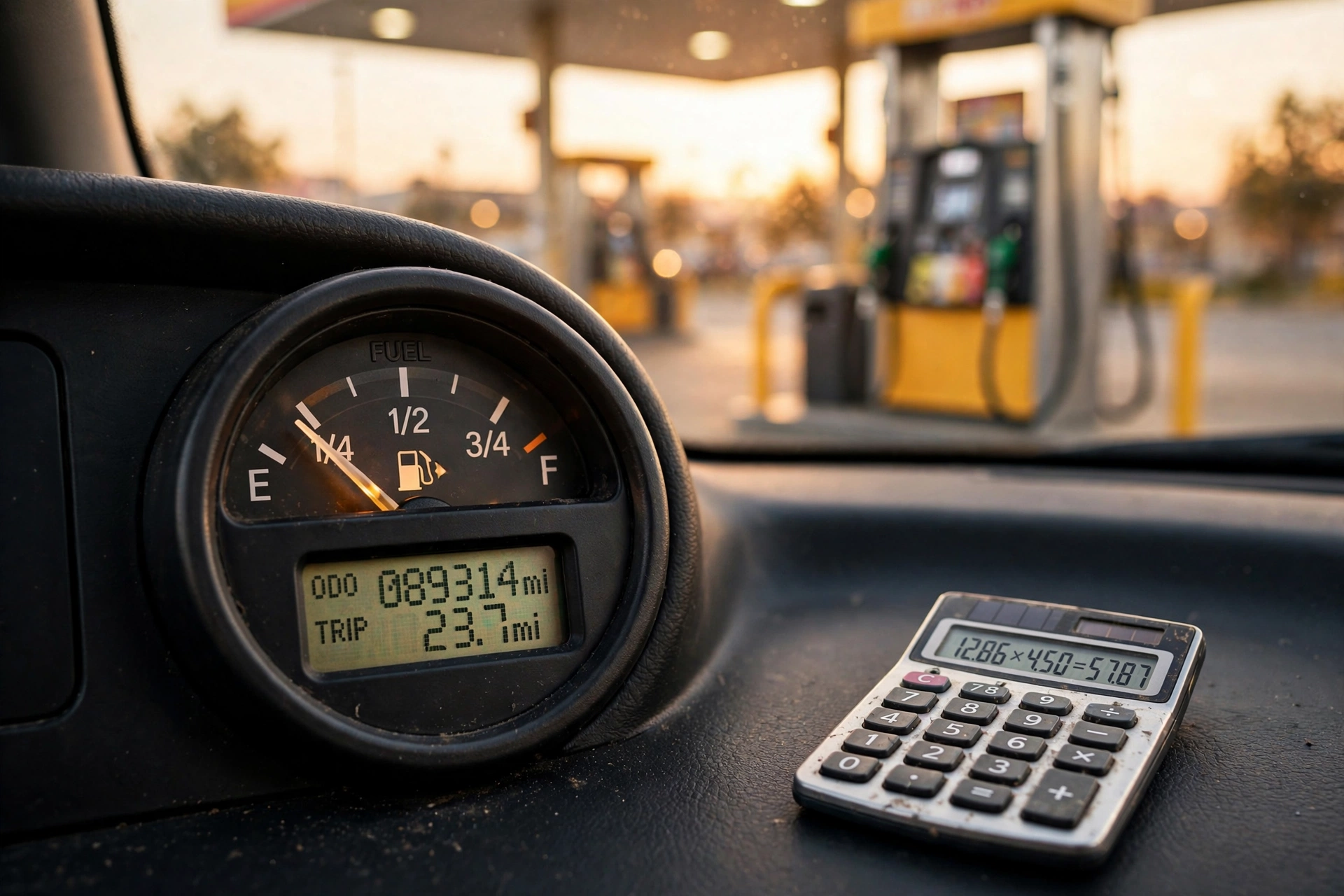
Your car. Fuel, maintenance, depreciation, cleaning. The IRS standard mileage rate — the per-mile deduction for business vehicle use — was 72.5¢/mile for January–June 2026, then raised mid-year to 76¢/mile effective July 1, 2026 (IRS Announcement 2026-11; mid-year changes are rare and signal fuel costs jumped). Track every business mile with its date — the rate that applies depends on when you drove.
Taxes. You’re an independent contractor (except Instacart in-store shoppers): no withholding, report on Schedule C, and owe 15.3% self-employment tax on net earnings. You must file if you net $400+ from self-employment, and make quarterly estimated payments if you’ll owe $1,000+. For 2026, the federal 1099-K threshold is $20,000 AND 200+ transactions — but no 1099-K doesn’t mean no tax owed; all income is reportable. (Not tax advice — talk to a tax professional about your situation.) Our delivery driver profit guide goes deeper on the expense side.
The insurance gap. If your personal policy excludes gig driving and you have an accident on an active delivery, you can be personally exposed. The rideshare endorsement exists for exactly this reason.
Waiting time. Unpaid on every app. This is the single biggest reason measured medians sit below self-reported figures — the hours you’re logged on aren’t the hours you’re paid for.
Tips: The Fragile Half of Your Pay
On food and grocery delivery, tips are roughly half your earnings — ~49% on DoorDash and Uber Eats, 40–60% on Instacart — versus ~10% for rideshare. That makes delivery pay structurally fragile: customers can reduce or remove tips after delivery (Instacart allows adjustments in a window after drop-off). A “great” delivery hour and a bad one can differ entirely on tip behavior you don’t control.
This is also why per-offer cherry-picking matters on delivery apps: experienced Dashers and shoppers decline low-tip offers and wait for better ones. Your acceptance rate may be tracked, but declining bad ones is the core skill of profitable delivery work.
Minimum-Pay Laws: Where the Math Changes
A few places now set legal pay floors for app workers. These are city/state-specific, not nationwide — but if you’re in one, they change everything:
- New York City: delivery workers must be paid at least $22.13/hour before tips (effective April 2026; NYC Dept. of Consumer and Worker Protection). The rule expanded to grocery apps in late 2025. In September 2026, DoorDash agreed to a $131.5 million settlement after the city found ~260,000 workers underpaid, mostly over excluded waiting time.
- Seattle: app-based delivery minimum of 47¢/minute + 80¢/mile, or $5.34 per offer, whichever is greater. Uber Eats paid ~$4.4M to 14,000+ workers in a September 2026 enforcement action.
- Minnesota: statewide rideshare minimum of $1.28/mile + $0.31/minute (in effect since January 2025).
- California: Prop 22 (upheld 2024) keeps drivers as independent contractors with an earnings guarantee.
If you’re choosing where to drive, local law is as important as the app.
Multi-Appging: The 20–40% Boost
Gridwise surveys report that drivers running multiple apps at once earn 20–40% more per hour than single-platform drivers. The mechanism is simple: you see more offers, cherry-pick the best ones, and pause the other apps while completing a delivery. A second industry source puts the gain at 15–30% — same direction, different sample.
It takes practice — juggling two apps’ acceptance policies and ratings systems while a timer runs isn’t beginner-friendly on day one. But once you’re comfortable, multi-apping is the closest thing to a free raise in gig work. (Results vary by market and execution; it’s a survey average, not a guarantee.)
Which Should You Choose?
There’s no universal winner, but the decision framework is straightforward:
- Pick Uber rideshare if you have a qualifying car, don’t mind passengers, and can work peak hours (late nights, weekends). Highest hourly ceiling, highest barriers.
- Pick DoorDash if you want the most consistent order volume and the lowest vehicle requirements — it’s the easiest to start and the hardest to starve on.
- Pick Instacart if you prefer daytime/weekend hours, don’t mind grocery shopping, and want the best per-mile efficiency. Batches take ~an hour each, so it’s steadier but less flexible minute-to-minute.
- Run two or more once you’re comfortable. The data says it pays.
And the unglamorous truth underneath all of it: gig pay rewards strategy more than effort. Working dinner rush in a dense, high-tip zone beats grinding dead Tuesday afternoons in the suburbs on any app. If you’re weighing gig work against other options, our online gigs roundup and weekend side hustles put it in context.
If the per-hour math here looks thin, local services pay better — you can start a cleaning business with no money using supplies you already own.
Mistakes That Shrink Gig Paychecks
- Counting gross as take-home. A $22/hr gross is not a $22/hr wage — subtract fuel, maintenance, depreciation, and 15.3% SE tax before comparing it to any job.
- Ignoring the tip share. If half your pay is tips, you’re in a volatile business. Don’t budget like it’s a salary.
- Accepting every offer. Low-ball offers exist on every app. Declining bad ones is the job skill, not rudeness.
- Driving without checking your insurance. The gap between personal and commercial coverage is where financial disasters live.
- Not tracking miles. The mileage deduction is often a gig driver’s biggest tax break — and it requires dated records.
- Assuming minimum-pay laws apply to you. They’re city/state-specific. Know your local rules or don’t count on them.
- Single-apping forever. Once you’re comfortable, adding a second app is the highest-ROI move in gig work.
Frequently Asked Questions
Which pays more, Uber, DoorDash, or Instacart?
By measured 2026 medians: Uber rideshare (~$22–$24/hr gross) pays the most per hour, followed by Uber Eats (~$14–$15), Instacart (~$12), and DoorDash (~$11–$12). But these are gross figures before car costs and taxes, they vary hugely by market, and per-mile Instacart actually leads. There’s no universal winner.
Can you really make $25 an hour on DoorDash?
Some drivers report it, but measured medians put DoorDash around $11–$12/hr gross across large samples. The gap comes from methodology: self-reports skew toward good weeks and often exclude unpaid waiting time. Treat $25/hr claims as possible in the right market and hours — not typical.
Do you need a car for DoorDash or Instacart?
DoorDash allows bike, scooter, or foot delivery in select markets, and officially has no vehicle make/model/year requirement for cars. Instacart full-service shopping requires a reliable vehicle (no stated age requirement). Uber rideshare requires a 4-door car 15 years old or newer.
How do taxes work for gig drivers?
You’re an independent contractor: no tax withholding, you report income on Schedule C, owe 15.3% self-employment tax on net earnings, and must file if you net $400+. Track your business miles — the 2026 IRS deduction is 72.5¢/mile (Jan–Jun) and 76¢/mile (Jul–Dec). This isn’t tax advice; talk to a tax professional.
Is multi-apping allowed?
Yes — you’re an independent contractor, not an employee. Gridwise surveys report multi-app drivers earn 20–40% more per hour by cherry-picking the best offers across apps. Just manage each app’s acceptance and ratings policies carefully.
Which gig app is best for beginners?
DoorDash has the lowest barriers (18+, any car, bike options in some markets) and the most consistent order volume, making it the easiest starting point. Instacart suits daytime schedules; Uber rideshare pays more per hour but requires a qualifying car and comfort with passengers.
The Bottom Line
Uber vs DoorDash vs Instacart isn’t really a contest with a winner — it’s three different trade-offs. Uber rideshare has the highest hourly ceiling and the highest barriers. DoorDash has the volume and the lowest entry requirements. Instacart has the best per-mile math and daytime-friendly hours. All three pay gross figures that shrink meaningfully after car costs and taxes, and all three depend more on your market and strategy than on the logo on the app.
The drivers who do well share the same playbook: work peak hours in dense zones, decline bad offers, track every mile, run more than one app, and never confuse gross pay with take-home pay. Do that, and gig work is honest, flexible money. Skip it, and it’s an expensive way to wear out your car.
Gig work has no repeat-client leverage — service side hustles with repeat clients build income that compounds instead of resetting every shift.
Sources
- DoorDash Dasher — what to expect when starting (official; earning modes, scheduling)
- DoorDash help — how Dasher earnings work (official; $2–$10+ base pay, 100% tips)
- DoorDash Dasher — requirements (official)
- NYC Dept. of Consumer and Worker Protection — delivery worker minimum pay (official; $22.13/hr)
- Gridwise 2026 Annual Gig Mobility Report via ZeroHedge (measured medians; ~1B gig jobs)
- GigWorkerMoney — 2026 delivery app pay comparison (tracked medians; Uber Eats $14.07, DoorDash $11.26)
- GiggleFinance — how much do Instacart shoppers make (tracked earnings; $12.51/hr median)
- Solo (worksolo) — Uber Eats vs DoorDash pay data (H1 2026 internal data)
- TechCrunch — Minnesota rideshare minimum pay deal ($1.28/mi + $0.31/min)
- HRMorning — Seattle Uber Eats wage enforcement ($4.4M; 47¢/min + 80¢/mile)
- IRS — standard mileage rates (official; 2026 rates)
- Ramp — 2026 mileage reimbursement guide (IRS Announcement 2026-11; 72.5¢ Jan–Jun, 76¢ Jul–Dec)