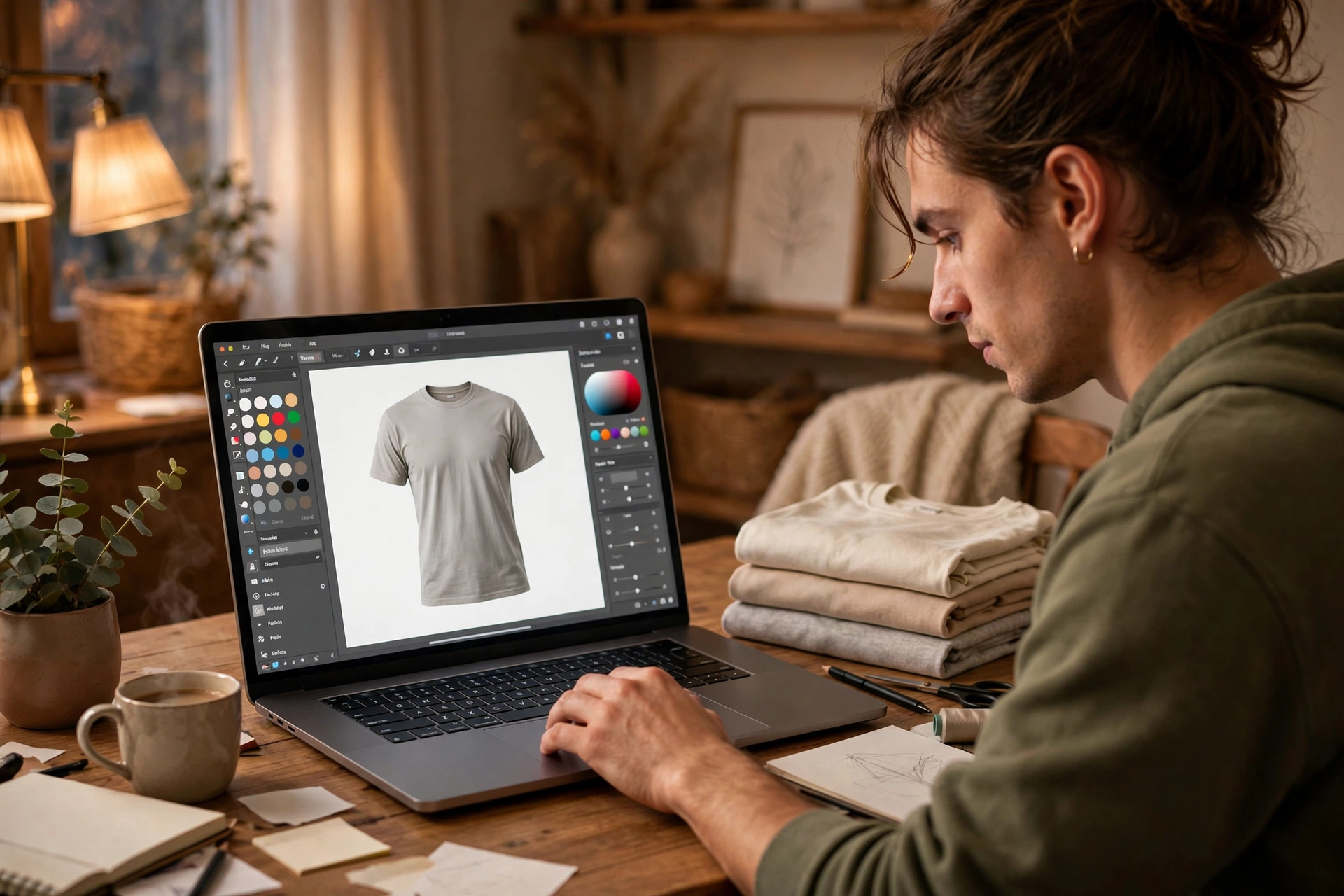

Opening an Etsy shop takes about an afternoon. Making your first sale takes longer — and the guides that gloss over that gap are why so many new shops stall at zero.
This guide is the honest version. You’ll learn what Etsy actually allows you to sell, what it really costs (with the fee math worked out), how to set up your shop, how to write listings that get found, and the mistakes that quietly sink beginner shops. No “six figures from your couch” promises — just what it takes to give yourself a real shot.
Disclosure: This post contains affiliate links. If you sign up through them, we may earn a commission at no extra cost to you.
What You Can (and Can’t) Sell on Etsy
Etsy isn’t a general marketplace like Amazon or eBay. Everything you list has to fit one of four categories in Etsy’s Creativity Standards: made by you, designed by you, handpicked by you, or sourced by you.
In plain terms, that means:
- Handmade items — physically made by hand or with tools like a 3D printer, Cricut, or CNC machine. You must use your own photos.
- Your original designs — including digital downloads like planners, templates, and printable art. If a third party prints or produces your design, you have to disclose that production partner. If you used AI to create it, you have to disclose that too.
- Vintage items — must be at least 20 years old and personally curated by you. A reproduction styled to look vintage doesn’t count.
- Craft supplies — tools, materials, and ingredients meant for making things, plus party supplies and items personalized with a buyer’s text or image.
Print on demand is one of the most popular Etsy models — our print-on-demand business guide covers real startup costs and free design tools.
One rule that trips up beginners: you cannot resell handmade goods you didn’t make or design. Buying wholesale jewelry or mass-produced decor and listing it as handmade will get your listings removed. Reselling is only allowed in the vintage and craft supplies categories.
If you’re not crafty, digital products are the most accessible entry point — and if you want a primer on that world first, read our guide to selling digital products for beginners.
The Real Cost of Selling on Etsy
Before anything else, do the fee math. This is the part beginners often skip — and skipping it is why so many underprice their products. Every figure below comes from Etsy’s own help pages — fee rates can change, so always confirm current numbers in your Shop Manager.

The four fees on (almost) every sale
| Fee | Amount (US) | When it applies |
|---|---|---|
| Listing fee | $0.20 per listing | Every time you publish or renew a listing; listings expire after 4 months |
| Transaction fee | 6.5% of the order total | Every sale — calculated on item price plus shipping and gift wrap |
| Payment processing | 3% + $0.25 per order | Every sale through Etsy Payments |
| One-time setup fee | Varies by location | Once, when you open your shop (shown during setup) |
A quick worked example. You sell a $20 item and charge $5 shipping — a $25 order:
- Listing fee: $0.20
- Transaction fee: 6.5% × $25 = $1.63
- Processing fee: 3% × $25 + $0.25 = $1.00
- Total fees: $2.83 — about 11.3% of the order
For a $50 item with $5 shipping ($55 order): $0.20 + $3.58 + $1.90 = $5.68, or about 10.3%. A useful rule of thumb for US sellers: budget roughly 9.5% + $0.45 per sale before product costs, packaging, and shipping labels.
The two fees that surprise beginners
Cheap items are proportionally expensive. Because $0.20 + $0.25 are fixed, small sales carry a heavy fee load. On a $5 digital download: $0.20 listing + $0.33 transaction + $0.40 processing = $0.93 in fees — about 18.5% of the sale. Price accordingly, or bundle small items together.
Offsite Ads can take another 12–15%. Etsy advertises listings on Google, Facebook, Instagram, and other sites. All sellers are auto-enrolled. If a buyer clicks one of those ads and buys from your shop within 30 days, Etsy takes 15% of the order total — or 12% once your shop has made $10,000 in a 365-day period. Here’s the catch: under $10,000 you can opt out, but once you cross $10,000, participation is mandatory for the life of the shop. The fee is capped at $100 per order. If your margins are thin, consider opting out while you’re small.
Two more to know: Etsy charges a 2.5% currency conversion fee if your payout currency differs from your listing currency, and it offers an optional Etsy Ads program (you set your own budget to promote listings inside Etsy’s search) and an optional Etsy Plus subscription with listing credits and extra tools. Neither is required to start.
Choose a Niche With Real Demand
The setup is easy — that’s exactly why so many new shops stall before their first sale. Anyone can open a shop; the ones that sell picked a product with real demand in a niche that isn’t already saturated.
Don’t start with what you want to make. Start with what people are already buying:
- Search Etsy like a buyer. Type a broad term — “planner,” “wedding invitation,” “beaded bracelet” — and watch the autocomplete suggestions. Those are real searches from real buyers.
- Study the top results. Which listings have high review counts? What keywords repeat across titles? That’s the language buyers use.
- Look for the gap. If page one is wall-to-wall shops with 10,000 sales, that’s saturation. If you see newer shops with modest reviews getting sales in a specific sub-niche (“minimalist budget planner for couples” rather than “planner”), that’s an opening.
- Pick one lane. Shops that sell planners, wedding templates, and wall art all at once usually do poorly at all three. Go deep on one category, one style, one audience.
Be honest with yourself about the work behind each option, too. Handmade means making and shipping every order. Print-on-demand means finding a reliable production partner. Digital products mean no shipping — but a brutally competitive market where your listing quality has to stand out.
Open Your Shop: The Setup Checklist
Go to etsy.com/sell and click through the wizard. You’ll need:
- An Etsy account with your email.
- Shop preferences — language, country, and currency. Set your shop currency to match your bank account’s currency to avoid the 2.5% conversion fee.
- A shop name — up to 20 characters, no spaces. Pick something flexible enough to grow with you (a studio-style name beats a product-specific one). Have backups ready; good names go fast. Check that the name isn’t taken on social media too, in case you promote later.
- At least one listing — Etsy requires you to publish a listing during setup. It doesn’t have to be perfect; you can edit everything later.
- Payment setup — enroll in Etsy Payments and connect a bank account (in some countries, a Payoneer account). This is how you get paid. Your fees are deducted from your balance automatically.
- A billing method — a credit or debit card to pay Etsy fees when your balance doesn’t cover them.
- Shop policies — returns and exchanges, cancellations, and privacy terms. Set these before your first sale so you have something to point to if a buyer asks for a refund.
You don’t need a perfect shop to start — branding, your About section, and shop banner can all be updated later. The priority is getting a real listing live.
One admin note: Etsy doesn’t require a business license to open a shop, but your state or city might have its own rules, and your Etsy income is taxable. In the US, self-employment income generally means owing self-employment tax on top of income tax — the IRS has a Self-Employed Individuals Tax Center with the details. Track your income and expenses from day one; our freelancing guide covers the recordkeeping habit that makes tax time painless.
Create Listings That Convert
A listing has one job: turn a searcher into a buyer. Here’s how each piece does that work.
Titles
Put your most important keywords first, because Etsy weighs the beginning of the title most heavily. Write for the buyer first, the algorithm second: “Personalized Leather Wallet for Men, Engraved Anniversary Gift for Him” beats “Wallet Leather Men Gift Personalized Anniversary.” Aim for a title a human would actually click.
Tags — all 13 of them
Etsy gives you 13 tags per listing. Use all 13, every time, with multi-word phrases buyers actually search (“bridesmaid proposal gift” beats “gift”). Vary them — don’t repeat the same phrase across tags, since Etsy already reads your title. Think synonyms, use cases, occasions, and materials.
Descriptions
Lead with what the buyer gets and why it’s right for them, then the details: dimensions, materials, colors, customization options, processing time, and what’s included. For digital products, spell out exactly what files they’ll receive and what software they need. Most buyer messages and bad reviews come from unclear descriptions — write the description that prevents them.
Categories and attributes
Choose the most specific category available and fill in every attribute (color, size, material, occasion). These power Etsy’s filters, and filtered searches convert better than broad ones.
Take Photos That Sell
Photos are your storefront. Buyers can’t touch your product, so your images have to do all the convincing.
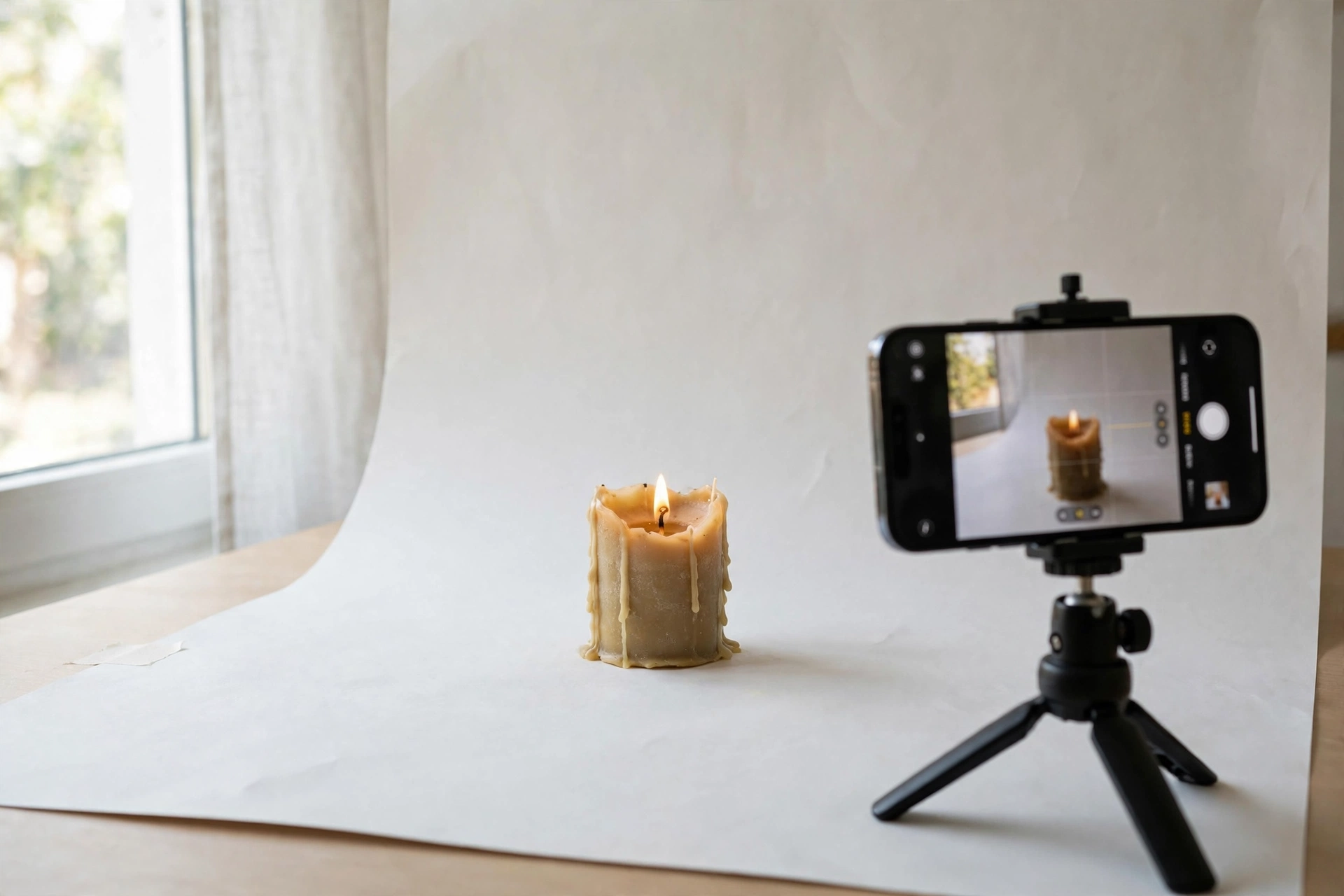
- Use natural light. A table near a large window beats any cheap lighting kit. Avoid harsh direct sun and yellow indoor bulbs.
- Your first photo is the thumbnail. It should show the whole product clearly on a clean, uncluttered background. This single image decides most clicks.
- Show it in use. Lifestyle shots — the candle lit on a coffee table, the planner open with a pen — help buyers picture it in their life.
- Include scale and detail. A hand holding the item, a close-up of texture or stitching. Surprises about size are a top cause of returns.
- Use all 10 photo slots. More photos correlate with more buyer confidence. Show angles, packaging, variations.
- For digital products, use mockups. Show the planner on a tablet, the wall art in a frame on a wall. Buyers need to visualize the end result.
A modern smartphone is genuinely enough to start. Clean background, good light, steady hands — that’s 90% of it.
Price for Profit (Not Just Sales)
Underpricing is the classic beginner mistake. A sale that loses money is worse than no sale. Build your price from the ground up:
- Your costs — materials, packaging, shipping labels, and any production-partner fees.
- Etsy’s fees — the ~9.5% + $0.45 rule of thumb, plus a buffer if you can’t opt out of Offsite Ads.
- Your time — even roughly. If a handmade item takes two hours and nets $4 after costs, that’s a hobby, not a business.
- The market — check what comparable listings charge. Pricing far below them can signal low quality to buyers and start a race to the bottom that’s hard to win.
Then sanity-check: after fees and costs, does each sale leave enough margin to be worth your time? If not, the answer is usually to raise the price, simplify the product, or pick a different product — not to hope volume fixes it.
Etsy SEO Basics: How Buyers Find You
Etsy search matches buyer queries against your titles, tags, descriptions, categories, and attributes. The fundamentals:
- Keywords go everywhere, naturally. Your main phrase should appear in the title, several tags, and the first sentences of the description.
- Match buyer language. Buyers search “boho wall art,” not “eclectic aesthetic home decor print.” Steal phrasing from autocomplete and top-selling titles.
- Renew and refresh. Updating titles, photos, and tags on underperforming listings is normal maintenance, not failure — treat your shop like inventory that needs regular tending.
- Keep adding products. Each new listing is another chance to be found — listing five items and waiting rarely works.
Etsy also personalizes results by buyer location and behavior, so don’t obsess over ranking #1 for a head term. Ranking well for specific, buyer-intent phrases (“personalized nurse graduation gift”) beats ranking poorly for “gift.”
Getting Your First Sales: A Realistic Timeline
Here’s the honest part most guides skip: opening the shop is not the hard part. Getting found among millions of listings is. There’s no guaranteed timeline for a first sale — it depends on niche, competition, listing quality, and how actively the shop is promoted. The shops that gain traction sooner usually have the fundamentals covered: a researched niche, a solid batch of quality listings (each one is another chance to be found), complete shop branding, and active promotion.
Things that actually help early on:
- Launch with more than a handful of listings. Aim for 15–20 solid listings before you judge results.
- Fill out your whole shop. About section, shop policies, banner, profile photo. Complete shops convert better because they look trustworthy.
- Share where your buyers hang out. Pinterest is a strong free channel for Etsy-style products; relevant Facebook groups and Instagram work too. Don’t spam — share useful, visual content that happens to link to your shop.
- Consider Etsy Ads carefully. A small test budget can buy early visibility and data on which listings get clicks. Set a strict budget, watch it like a hawk, and kill it if the math doesn’t work.
- Ask for reviews the right way. After a smooth order, a short thank-you note inviting feedback is fine. Never offer discounts for reviews — that violates Etsy’s policies and buyers’ trust.
Don’t expect passive income. Etsy rewards shops that treat it like a small business: listing consistently, answering messages quickly, and improving based on what the data tells you. If the “set it and forget it” pitch is what drew you here, read our realistic guide to passive income to recalibrate before you invest months.
7 Beginner Mistakes That Kill Etsy Shops
- Pricing without doing the fee math. If you didn’t account for the 6.5% transaction fee, processing, and the $0.20 listing fee, your “profit” is fiction.
- Selling what you like instead of what sells. Your taste is not market research. Validate demand first.
- Five listings and silence. A tiny shop with no new listings signals “abandoned” to both buyers and the algorithm.
- Copying top sellers’ photos or text. Besides being against policy, it guarantees you look like a worse version of someone established.
- Ignoring the reselling rules. Listing wholesale or dropshipped goods as handmade gets listings removed and can end your shop.
- No niche. “A little bit of everything” competes with everyone and wins against no one.
- Quitting at 60 days. The first couple of months can feel dead even for shops that later gain traction. The ones that made it kept listing and learning.
FAQs
How much does it cost to start selling on Etsy?
Opening the shop itself costs a one-time setup fee that varies by location (shown during setup). After that, you pay $0.20 per listing, and per sale you pay a 6.5% transaction fee plus payment processing (3% + $0.25 per order for US sellers). Optional costs include Etsy Ads, the Etsy Plus subscription, shipping supplies, and materials. A digital-product shop has the lowest upfront Etsy fees: the one-time setup fee plus $0.20 per listing, with no material or shipping costs.
Do I need a business license to sell on Etsy?
Etsy doesn’t require one, but your state, county, or city might — check local rules. You do need to report your income: in the US, Etsy sends tax forms to sellers who meet IRS reporting thresholds, and self-employment income is generally subject to self-employment tax. Talk to a tax professional if you’re unsure.
How much can beginners earn on Etsy?
It varies enormously, and anyone quoting you a typical beginner income is guessing. Your earnings depend on your niche, pricing, margins, listing count, and how consistently you work the shop. Etsy doesn’t publish average seller earnings. Go in expecting months of learning before meaningful income — and be suspicious of any course or guru promising otherwise.
Can I sell on Etsy if I’m not crafty?
Yes. Digital products (planners, templates, printable art) require design skills, not crafting. Vintage curation requires an eye, not a workshop. Print-on-demand lets you sell your designs on physical products without making anything yourself — just remember you must disclose your production partner.
Can I resell things I bought wholesale on Etsy?
Not as handmade. Etsy’s rules prohibit listing items as handmade when you weren’t involved in designing or making them. Reselling is only allowed for vintage items (20+ years old) and craft supplies. Our thrift-to-online reselling guide covers how to spot undervalued items worth flipping (note Etsy’s vintage items must be at least 20 years old). Wholesale or dropshipped finished goods don’t qualify.
How long does it take to get your first sale?
There’s no standard timeline — it varies by niche, competition, listing quality, and effort. Shops that launch with a solid batch of well-optimized listings and promote them tend to get found sooner, but nothing is guaranteed. If you have five listings and no promotion, expect it to take longer.
Is selling on Etsy still worth it in 2026?
It can be, for the right person and product. Etsy gives you instant access to millions of buyers actively looking for unique goods — traffic you’d spend months building on your own website. The trade-off is fees on every sale and real competition. It’s worth it if you treat it as a business: researched niche, correct pricing, consistent effort. It’s not worth it as a lottery ticket.
The Bottom Line
Selling on Etsy in 2026 comes down to five things: a product people already want, a shop that looks trustworthy, listings optimized for how buyers search, prices that survive the fee math, and the patience to keep going while the shop gains traction. None of it is complicated. All of it takes work.
Open the shop this week. List your first real product. Then keep listing, keep learning, and let the data — not your hopes — tell you what to do next. That’s the whole strategy, and it’s enough.